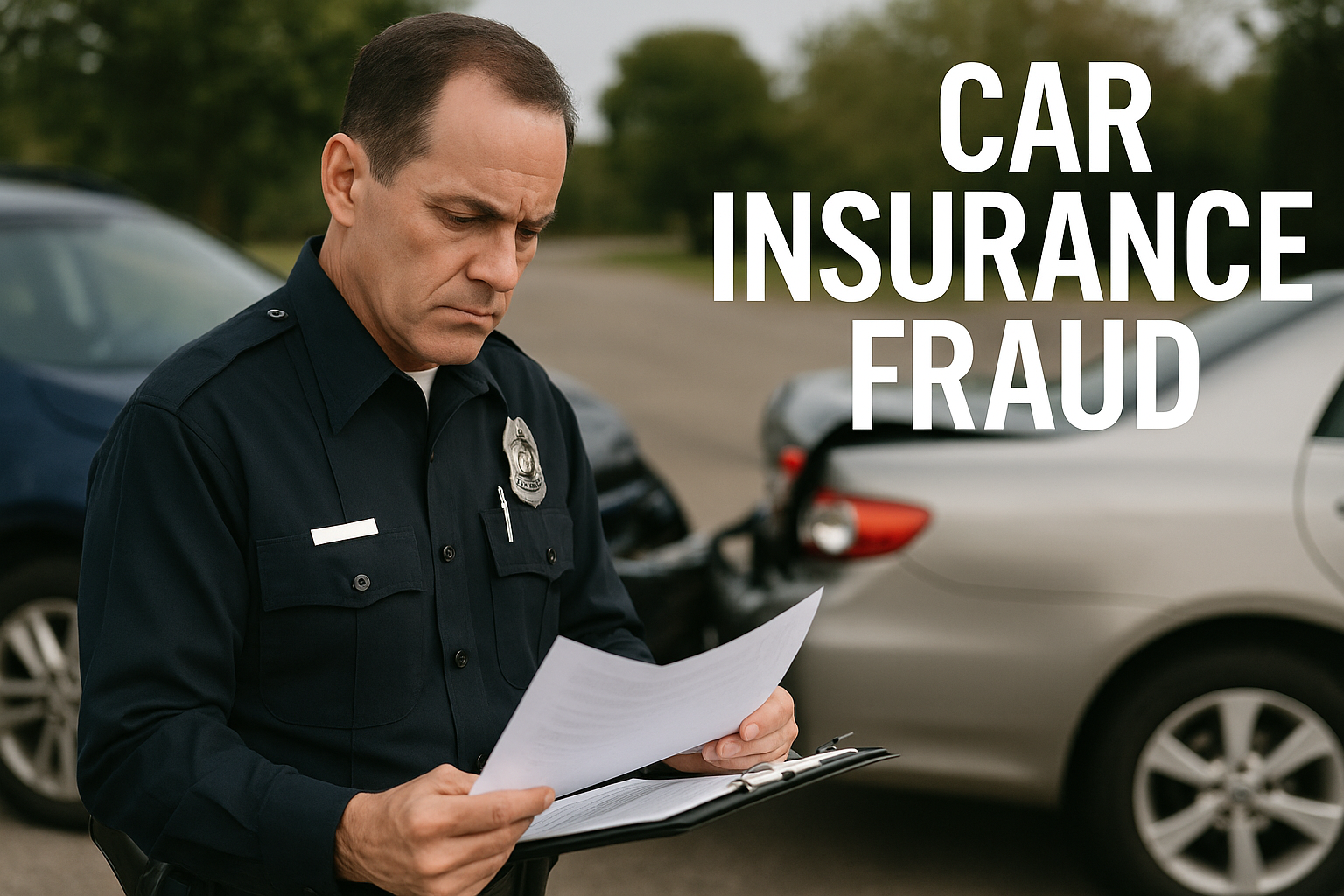

What Happens If Someone Commits Car Insurance Fraud?
Car insurance is a necessity for every driver in the UK, but some people make the dangerous mistake of trying to cheat the system through insurance fraud. It may look like a small exaggeration on a claim or a harmless lie on an application, but in reality, insurance fraud is a criminal offence with serious legal, financial, and personal consequences. In this detailed guide, we’ll break down exactly what happens if someone commits car insurance fraud in the UK — from investigations to court sentences, from ruined financial futures to the permanent stain on your record.
This article explains everything you need to know in a simple, conversational tone, so you fully understand why insurance fraud is never worth the risk.
Understanding Car Insurance Fraud in the UK
What Is Insurance Fraud?
Insurance fraud happens when someone deliberately lies, manipulates information, or stages an event in order to benefit from an insurance policy. In the UK, it is a criminal act under the Fraud Act 2006, which clearly states that dishonestly making a financial gain through deception is punishable by imprisonment, fines, or both.
Insurance fraud doesn’t always look dramatic. Sometimes it’s subtle — a driver exaggerates damage, provides false information, or stages an accident. Other times, it involves organised gangs running large-scale crash-for-cash schemes.
But no matter the scale, insurance fraud is treated seriously because it raises premiums for every honest driver in the country.
Common Types of Car Insurance Fraud
Millions of pounds are lost every year to insurance fraud. Here are the most common forms:
1. Staged Accidents (Crash-for-Cash)
Criminals intentionally cause an accident or make it appear like one occurred. They then submit inflated claims for injuries, repairs, and losses.
2. Exaggerated Claims
The driver experiences a minor accident but inflates the value of the damage or claims for injuries that never occurred.
3. Providing False Information When Buying Insurance
This includes lying about your address, job, mileage, or vehicle usage to get cheaper premiums.
4. Adding “Fronting”
A parent falsely lists themselves as the main driver instead of their young driver child to get a cheaper policy. This is a common but illegal form of insurance fraud.
5. Ghost Broking
Fraudsters sell fake insurance to unsuspecting drivers. The buyers think they have real insurance — until something happens.
6. Claiming on a Non-Existent Policy
Some people try to make a claim on someone else’s policy or on a policy that has already been cancelled.
All these fall under the broad category of insurance fraud, and each carries heavy penalties.
Why People Commit Insurance Fraud
Understanding why people take the risk helps explain how widespread the issue is. Even though the consequences of insurance fraud are severe, many still attempt it — sometimes knowingly, other times out of ignorance.
Financial Pressure and Temptation
In the UK, the rising cost of living has pushed some people into desperate decisions. When they see a minor accident as a quick opportunity to “get money back,” they may be tempted to exaggerate the damage or claim injuries that don’t exist.
For others, the temptation comes when they see friends or online influencers bragging about how they “beat the system.” But what they don’t show are the court hearings, the fines, the ruined credit scores, and the criminal records that follow.
In reality, insurance fraud offers short-term gain at the cost of long-term destruction.
Greed and Opportunistic Behaviour
Some people view insurance companies as “wealthy corporations” they can easily outsmart. They believe exaggerating a claim — “just a little” — isn’t a big deal.
What they don’t realise is that insurers have advanced fraud detection software, partner with the police, and share detailed information across the entire industry. A simple exaggerated claim could result in permanent blacklisting.
Lack of Awareness of Legal Consequences
A large number of offenders simply don’t know that insurance fraud is a criminal offence. Some assume insurers will “just reject the claim,” but they don’t understand that insurers can — and often do — transfer the case directly to the police for prosecution.
And the penalties? They can be life-changing.
How Car Insurance Fraud Is Detected in the UK

People often think they can outsmart insurers, but the reality is very different. Insurance companies invest heavily in fraud detection and work closely with UK authorities.
How Insurers Investigate Claims
When an insurer suspects insurance fraud, they don’t guess — they investigate. Their methods include:
-
interviewing the claimant
-
checking past claims
-
comparing evidence from both parties
-
sending experts to inspect vehicles
-
analysing accident reports
-
reviewing medical records
-
requesting CCTV and dashcam footage
-
using telematics (black box) data
-
conducting background checks
Even a small inconsistency can trigger deeper investigation.
Insurers also use the CUE (Claims and Underwriting Exchange) database, which records every claim you’ve ever made. If your story contradicts past behaviour, the insurer will dig deeper.
Role of the Police and Insurance Fraud Bureau (IFB)
The Insurance Fraud Bureau (IFB) plays a major role in detecting organised fraud, especially crash-for-cash operations.
You can verify their official site here:
🔗 https://insurancefraudbureau.org/
The IFB works with:
-
police forces across the UK
-
insurers
-
solicitors
-
DVLA
-
Action Fraud
When a case seems criminal, the IFB coordinates with police to launch full investigations — sometimes involving surveillance, arrests, and raids.
Technology Used in Insurance Fraud Detection
Modern fraud detection is heavily technology-driven. Insurers now use:
-
AI-driven algorithms to detect suspicious claim patterns
-
data-sharing platforms
-
ANPR (Automatic Number Plate Recognition) to confirm vehicle movement
-
black box (telematics) to track speed, braking, and location
-
CCTV footage from shops, roads, and private cameras
-
dashcam evidence
-
digital forensics on photos submitted during claims
Even edited or staged photos can be detected instantly through digital fingerprinting software.
Every year, technology increases — but fraudsters rarely adapt.
What Happens Legally If Someone Commits Insurance Fraud?
This section explains the real consequences — not myths, not rumours, but what actually happens under UK law.
Criminal Charges and Prosecution
Car insurance fraud is prosecuted under:
-
Fraud Act 2006
-
Theft Act 1968
-
Road Traffic Act 1988 (if driving uninsured)
Depending on severity, the offender may face:
-
criminal investigation
-
arrest
-
formal charges
-
court hearings
-
sentencing
-
confiscation of assets
-
repayment orders
Fraud is taken very seriously because it increases costs for every honest driver.
Fines, Convictions, and Jail Time
Here are the possible penalties depending on the severity of the insurance fraud:
| Type of Fraud | Possible Penalty |
|---|---|
| Minor claim exaggeration | £300–£2,500 fine, claim rejected |
| Providing false information | Policy cancelled + fine |
| Driving with fake/invalid insurance | 6 penalty points + unlimited fine |
| Crash-for-cash | Serious criminal offence |
| Organised fraud ring | 2–7 years imprisonment |
Maximum sentence under the Fraud Act 2006: 10 years in prison.
Even first-time offenders are not exempt.
Civil Penalties by Insurers
Aside from criminal charges, insurers also impose civil consequences:
-
Immediate policy cancellation
-
Lifetime mark on fraud databases
-
Denial of all claims
-
Loss of no-claims bonus
-
Being refused future insurance
This means future premiums can triple or quadruple — and in some cases, you may only be able to buy insurance from high-risk specialist providers.
Financial Consequences of Insurance Fraud
The financial damage caused by insurance fraud is long-lasting.
Repayment of Claims and Investigation Costs
If the fraudster already received money from a claim, the insurer will legally demand repayment. Failure to do so can lead to:
-
county court judgments (CCJs)
-
wage garnishment
-
seizure of assets
The insurer may also demand that the person pays investigation costs, which can reach thousands.
Higher Premiums for Life
Every insurance company in the UK shares data. Once flagged for insurance fraud, the person becomes a “high-risk customer.”
Future premiums can increase by:
-
50% on the low end
-
200% on the high end
-
sometimes insurance becomes completely unaffordable
Being Added to the Insurance Fraud Register (IFR)
This is one of the harshest consequences.
The Insurance Fraud Register is a national list of people involved in fraud. The record stays for five years — sometimes longer.
Once on this list:
-
most insurers refuse to provide cover
-
specialist insurers charge extremely high premiums
-
some employers will not hire you
-
it becomes nearly impossible to get favourable financial services
Impact on Employment and Personal Reputation
This part is often overlooked — but extremely important.
Losing Your Job
Some professions require honesty and clean records, especially:
-
police
-
NHS
-
banking
-
childcare
-
law/legal services
-
government positions
-
security
A fraud conviction, even if small, can lead to immediate dismissal.
Difficulty Getting Future Employment
Most employers now perform background checks.
Insurance fraud appears on:
-
DBS checks
-
enhanced background checks
-
financial checks
-
internal HR systems
-
government records
A fraud record can stop you from getting:
-
visas
-
banking jobs
-
accounting roles
-
finance positions
-
public sector jobs
Fraud ruins trust — and trust is everything.
Real-Life Examples of Insurance Fraud Cases in the UK
Nothing explains consequences better than real-life events. The UK has reported thousands of insurance fraud cases, many resulting in arrest, prosecution, and imprisonment.
Staged Crash-for-Cash Gangs
Crash-for-cash operations are among the most dangerous forms of insurance fraud. Criminals slam their brakes intentionally to cause rear-end collisions. Innocent drivers get blamed and fraudsters claim:
-
whiplash injuries
-
lost wages
-
repair costs
-
personal injury payouts
The Insurance Fraud Bureau has dismantled dozens of these gangs. In 2022, multiple Birmingham residents were jailed for running a crash-for-cash ring that targeted delivery drivers. Sentences ranged from 18 months to 7 years.
Crash-for-cash is not “smart hustling.” It’s organised crime — and the courts treat it as such.
Individuals Caught Inflating Claims
You don’t need to be part of a gang to face severe punishment.
Examples include:
-
A driver jailed for six months after claiming injuries that CCTV proved impossible.
-
A man from Manchester fined £7,000 after adding pre-existing damage to a new claim.
-
A woman blacklisted after lying about her job title and vehicle mileage.
Even what some consider “small lies” are still insurance fraud, and insurers rarely show mercy.
Ghost Broking — A Serious Form of Insurance Fraud
Ghost broking is one of the fastest-growing schemes in the UK, especially among young drivers.
What Ghost Broking Means
Ghost brokers pose as insurance agents offering “cheap insurance deals.” They operate:
-
on Instagram
-
on Telegram
-
on Facebook
-
through WhatsApp
-
on unregulated websites
They sell:
-
counterfeit insurance documents
-
manipulated policies with false information
-
genuine policies that are cancelled immediately after purchase
Drivers believe they have insurance — until they get stopped by police or file a claim.
Driving with fake insurance is still insurance fraud, even if the victim didn’t know.
Penalties for Ghost Brokers and Victims
Ghost brokers face:
-
up to 10 years in prison
-
fraud charges
-
money laundering charges
-
asset seizure
Victims, unfortunately, face:
-
vehicle seizure
-
6 penalty points
-
driving licence fines
-
prosecution for having “invalid insurance”
-
higher premiums afterward
Being a victim doesn’t protect you fully — the law still requires you to verify the legitimacy of your insurance.
How Insurers Respond to Fraudulent Behaviour
Insurance companies operate under strict government regulations. When they identify insurance fraud, they follow a structured response.
Claim Rejection
If a claim contains lies, exaggerations, or dubious information, insurers reject it instantly. They do not partially approve fraudulent claims — once fraud is confirmed, the entire claim collapses.
Permanent Record of Fraud
Fraud is recorded across multiple databases:
-
CUE (Claims and Underwriting Exchange)
-
IFR (Insurance Fraud Register)
-
Motor Insurance Anti-Fraud and Theft Register
-
Internal insurer databases
The fraud mark can last between 5 and 10 years, depending on severity.
Once you are flagged, future insurers will:
-
increase your premiums
-
cancel applications
-
require additional verification
-
offer only high-risk policies
How Long Insurance Fraud Stays on Your Record
People often underestimate this part.
Insurance fraud usually stays on your record for:
-
5 years on CUE
-
5 years on IFR
-
lifelong in internal insurance systems
Even after the 5-year period ends, insurers often store historical records indefinitely. This means many fraudsters never return to normal premium levels again.
How to Avoid Being Accused of Insurance Fraud
Even honest people sometimes face investigations because of misunderstanding or mistakes. Here’s how to avoid that.
Provide Honest and Accurate Information
Always ensure your insurance application includes correct:
-
job title
-
address
-
vehicle usage
-
annual mileage
-
named drivers
-
storage location
Any mistake — even accidental — may look like insurance fraud.
Report Accidents Immediately
Delaying report submission makes insurers suspicious. For accuracy:
-
report the accident as soon as possible
-
gather evidence (photos, videos, witness statements)
-
do not alter any details
-
avoid exaggeration
Honesty always protects you.
What to Do If Falsely Accused of Insurance Fraud
Sometimes, insurers make mistakes or misunderstand facts. Here’s what to do.
Seek Legal Representation
Once you are suspected of insurance fraud, do not try to handle the situation alone. A solicitor will help you:
-
interpret insurer accusations
-
respond legally
-
prepare documentation
-
defend you in court (if necessary)
Speak with Your Insurer
Provide:
-
photos
-
CCTV evidence
-
dashcam footage
-
medical records
-
witness details
-
repair invoices
Clear evidence can overturn suspicion.
You may also contact the Financial Ombudsman Service if you believe the insurer acted unfairly.
🔗 https://www.financial-ombudsman.org.uk/
How to Report Insurance Fraud in the UK
If you witness or suspect fraud, you can anonymously report it.
Report to the Insurance Fraud Bureau (IFB)
The IFB investigates large-scale and individual fraud cases.
🔗 https://insurancefraudbureau.org/report-fraud/
This is the official reporting channel for suspicious insurance activity.
Report to Action Fraud
Action Fraud is the UK’s national fraud reporting centre.
🔗 https://www.actionfraud.police.uk/
Reports made here go directly to the National Fraud Intelligence Bureau.
The Future of Insurance Fraud Detection
Fraud detection is evolving rapidly.
AI and Data Sharing
Insurers now use:
-
predictive algorithms
-
machine learning models
-
cross-insurer analytics
-
behavioural pattern tracking
-
anomaly detection systems
As technology becomes smarter, committing insurance fraud becomes almost impossible without being caught.
Telematics and Vehicle Sensors
Black box insurance has become a powerful tool in:
-
providing accurate speed data
-
mapping accident locations
-
tracking driver behaviour
-
disproving false claims
If a driver claims an accident happened at 8 pm, but telematics shows the car parked at home, the fraud collapses instantly.
Final Thoughts on Insurance Fraud and Consequences
Many people believe insurance fraud harms only the insurer, but in reality:
-
every fraudulent claim raises premiums for honest drivers
-
insurers lose millions
-
police resources are stretched
-
public services suffer
Insurance fraud is not a mistake — it is theft, dishonesty, and deception.
And the consequences show no mercy.
Conclusion
Insurance fraud may look like a shortcut, but it is a destructive path with serious consequences that far outweigh any temporary gain. Whether it’s exaggerating a claim, staging an accident, lying on an application, or unknowingly buying fake insurance, every type of insurance fraud carries the risk of:
-
criminal prosecution
-
heavy fines
-
imprisonment
-
permanent records on national databases
-
long-term increases in insurance premiums
-
loss of employment opportunities
-
damaged reputation
-
legal repayment of claims
-
lifelong limitations in the financial sector
Insurance companies, the police, and the Insurance Fraud Bureau are now using advanced digital tools, AI algorithms, telematics data, and national data-sharing systems to detect fraud faster and more accurately than ever before. That means even small dishonest actions are easily identified.
The smart and safe approach? Be honest.
Provide accurate information, report accidents correctly, and avoid anyone offering “cheap insurance deals.” If a situation feels suspicious, walk away — because once a fraudulent act is traced back to you, the consequences can affect not just your finances, but your entire life.
Insurance fraud is never worth the risk. Integrity is always the best policy.
FAQs About Car Insurance Fraud
FAQ 1: Will insurers always press charges for insurance fraud?
Yes. Once an insurer discovers insurance fraud, they almost always take action. They may:
-
cancel your policy
-
report you to the Insurance Fraud Bureau
-
pass the case to the police
-
pursue criminal charges
-
blacklist you on national databases
Insurers take a zero-tolerance approach because fraud costs the industry millions every year.
FAQ 2: How long does insurance fraud stay on my record?
Insurance fraud typically stays:
-
5 years on CUE
-
5 years on the Insurance Fraud Register (IFR)
-
permanently on many internal insurance systems
Even after the official 5-year period, many insurers continue to consider past fraud when calculating premiums.
FAQ 3: Can I go to jail for lying about my insurance information?
Yes, absolutely. Even providing false information on an insurance application — such as mileage, job title, or address — constitutes insurance fraud. Under the Fraud Act 2006, you could face:
-
fines
-
a criminal record
-
or up to 10 years in prison
While jail time is more common for organised or large-scale fraud, even minor dishonesty can still result in prosecution.
FAQ 4: What happens if someone unknowingly buys fake insurance from a ghost broker?
Unfortunately, the victim is still held responsible for driving without valid insurance. This means they could face:
-
6 penalty points
-
a large fine
-
vehicle seizure
-
higher future insurance premiums
However, the buyer will not face fraud charges if they can prove they were genuinely deceived. They should immediately report the incident to:
-
Action Fraud
-
The Insurance Fraud Bureau
-
their insurer
And avoid buying insurance from social media sellers.
FAQ 5: How can I protect myself from being falsely accused of insurance fraud?
To stay safe:
-
Provide accurate information when buying insurance
-
Report accidents promptly
-
Take clear photos and videos of any damage
-
Keep receipts, repair invoices, and medical records
-
Use a dashcam for added protection
-
Avoid exaggerating claims
-
Avoid ghost brokers or unofficial agents
If you’re falsely accused, contact a solicitor immediately and gather evidence to support your case.
